Virtual reality (VR)

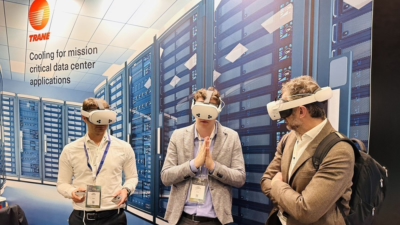
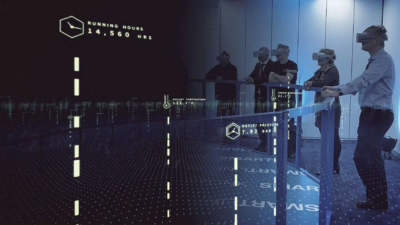
Put on the goggles and enter your virtual world - lifelike, somewhat real or totally imaginary. We create your custom virtual reality (VR) interactive experiences, with video and/or 3D animated ingredients and real-time tracking of headset and controllers. For marketing, training and service, an abundance of real world applications are ready to be discovered.

World creation

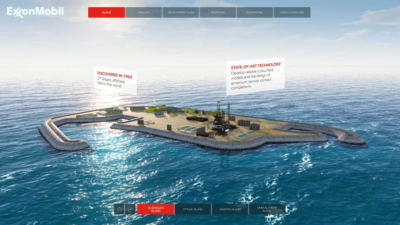
Virtual reality worlds are constructed in specialized software tools by VR developers. The virtual environment itself is created by 3D animators, 360° video teams, or a combination of both. VR allows for training environments that are inherently safe, factory tours that are unobtrusive, lab experiments that leave no toxic fumes and product demos that totally immerse the potential customer. If a trainee or a visitor breaks virtual equipment or causes an explosion in a virtual chemical plant, the only damage is his self-esteem.

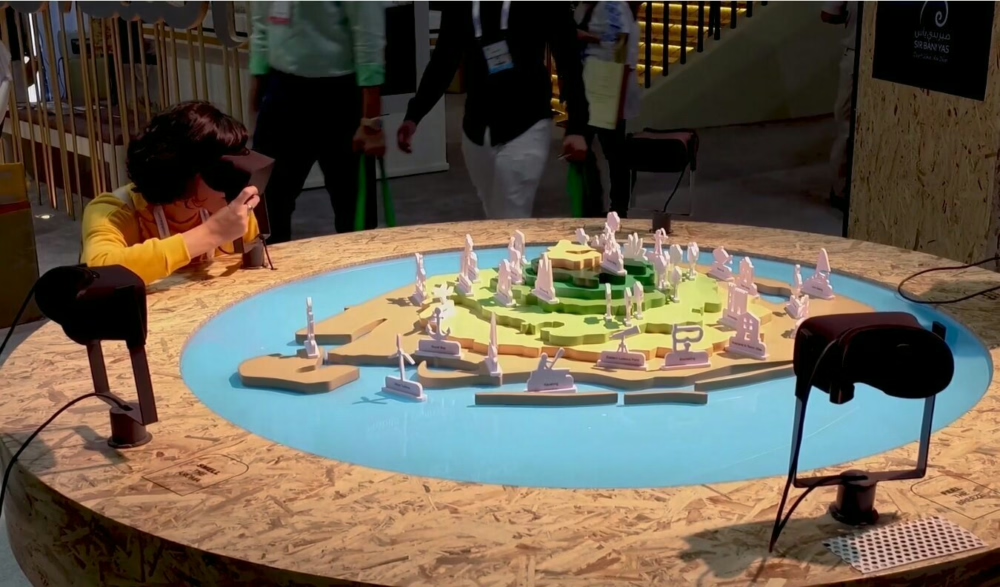
VR service Fluvius 3 D world
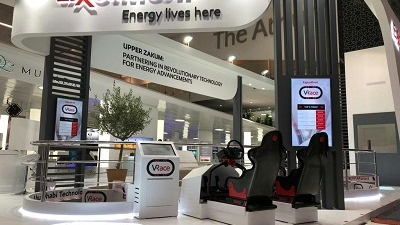
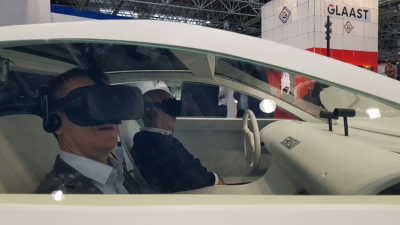
VR service 4 D setup

Unseen interactivity

Entering a VR world is interactive by definition: moving your head lets you look around in a lifelike manner. By adding hand controllers, visitors or trainees can actually manipulate objects and do real-world exercises. Installing laser trackers brings an additional degree of freedom, allowing the user to walk around in a room, and interact with the environment.

Multi-skill development

Building a VR application requires the talent of many people: script writers, graphics designers, 3D modelers and animators, software engineers and VR developers. As a one-stop-shop, we have these teams, and the required software tools, under one roof. This allows us to produce the whole VR experience in-house, ensuring consistent quality and a single point of contact. Our experience and 100% focus on corporate and industrial work gives us the edge in creating virtual factories, virtual labs, virtual machinery and so on.
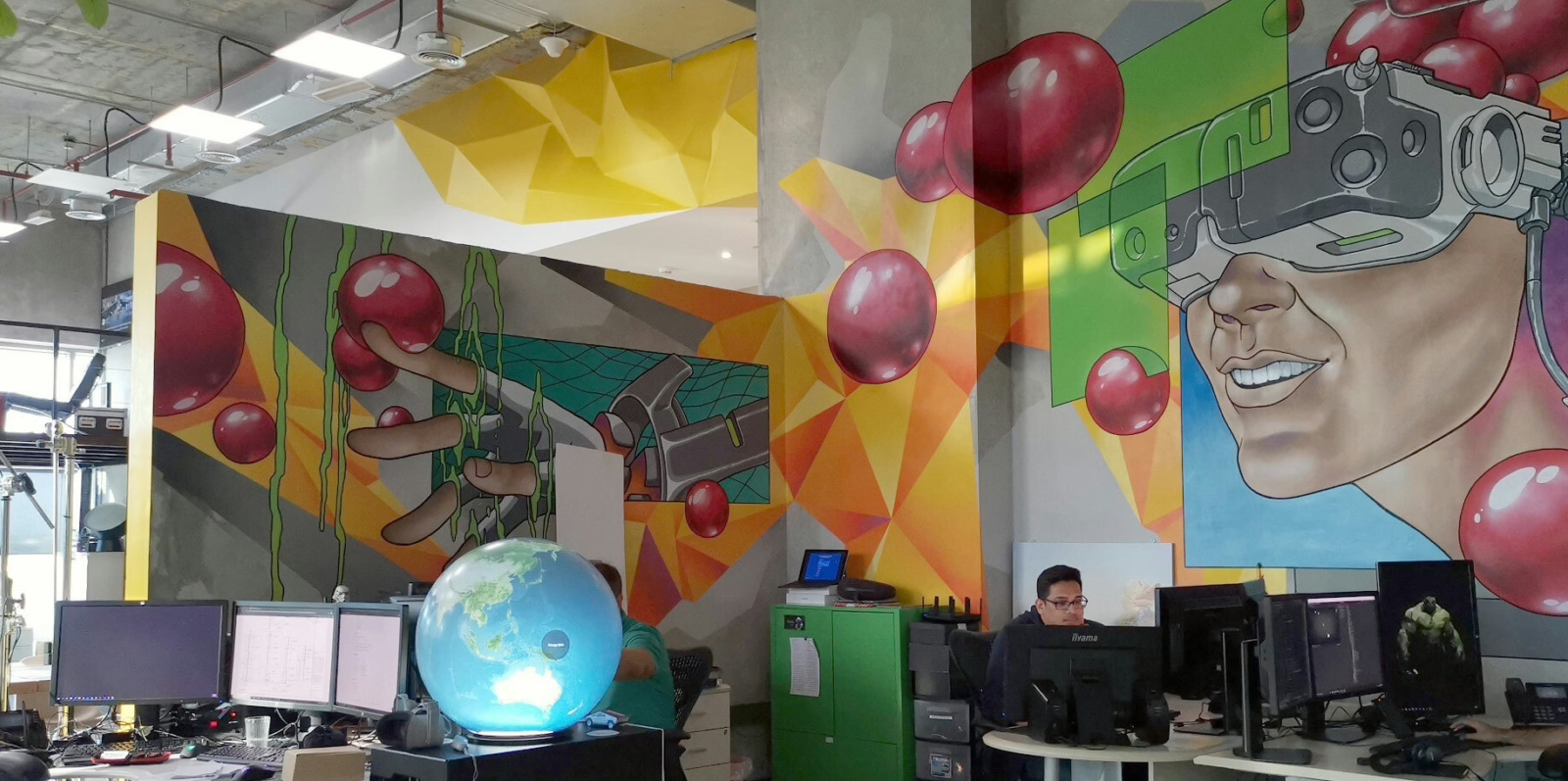
VR application development office

Consulting services

Virtual Reality is an evolving technology. The line between VR and MR - mixed reality - is blurring with newer VR headsets and the software toolkit for app development is still evolving.
The decision to embark on this technology should be taken in an informed manner. Our consultants are ready to discuss your project and help determine important parameters like use of a virtual world versus 360° video, the suitability of existing 3D models, the level of detail, degree of realism and types of interaction, because they have a direct impact on the required budget.

Examples

Frequently asked questions

What is Virtual Reality (VR)?

VR uses fully enclosed head-mounted displays (HMDs) to completely immerse a user in a simulated, 1:1 scale 3D environment. By replacing the physical workspace with a highly accurate digital duplicate, companies can simulate training, design, and operational workflows with zero real-world risk or material cost.

When should your business choose VR over AR or MR?

Choose VR when you need to completely isolate the user from their physical surroundings to simulate an environment that is too dangerous, expensive, or physically impossible to access (e.g., a deep-sea oil rig or a sterile cleanroom).

Choose AR or MR when the worker is actively performing a task in their actual physical environment and needs a hands-free, real-time digital helper to guide their work.

What are key B2B and industrial applications of VR?

Enterprise VR has three core pillars:

  • Virtual, high-risk or remote training allows trainees to be anywhere, make mistakes without consequences and use zero material cost.
  • Collaborative design allows global teams to work on multi-user 3D models, for product development, reviewing and modifications.
  • Virtual showrooms can showcase products or equipment in ways no physical setup can match. Custom configurators, X-ray views, simulations, ... and all with zero logistics cost.
Why is VR so interesting for training?

The business case for industrial VR centers on risk mitigation, cost savings, and speed-to-market:

  • Drastically lower training costs: Travel, hardware wear-and-tear, and facility downtime are eliminated.
  • Zero-risk safe failure: Trainees can safely experience high-stakes, hazardous scenarios (such as chemical spills, arc flashes, or emergency shutdowns) to build immediate muscle memory.
  • Unmatched knowledge retention: Because the brain processes VR simulations as physical experiences, immersive training leads to up to 4x faster training speeds and up to 75% higher retention rates compared to traditional classroom or e-learning methods.

Typical applications are:

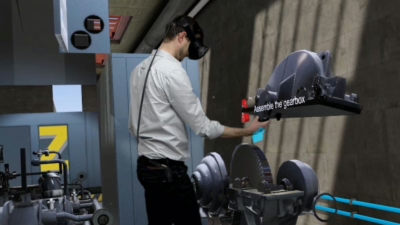
  • Assembly training: operators learn the correct steps and procedures to assemble products, even before the actual production line is built.
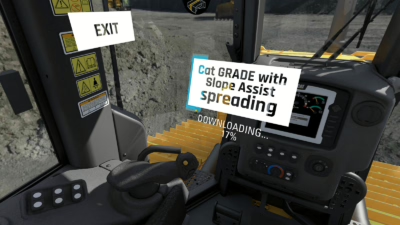
  • Process training: operators learn how to start up, shut down, and maintain equipment without taking the actual physical machines offline.
  • Hazard identification: workers walk a virtual site to find and flag HSE violations or safety hazards in a risk-free environment.
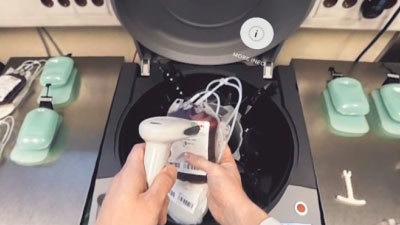
  • Standard Operating Procedures (SOPs): new hires repeatedly practice complex procedures (like cleanroom sterilization in pharmaceutical manufacturing) until they consistently hit precision standards.
Can VR offer sales and marketing support?

Shipping massive, heavy, or highly customized industrial equipment to trade shows or client offices is incredibly costly and logistically challenging.

With a portable VR headset, sales teams can bring their entire heavy machinery product line directly to a buyer's office. Clients can walk around, step inside, and interact with the equipment at a true scale, giving them the confidence to close high-value contracts faster.

Can your existing CAD and 3D files serve as input for a VR project?

Modern enterprise VR platforms easily ingest standard industrial CAD files (from SolidWorks, Autodesk, Siemens, etc.). We optimize and import these models into real-time engines like Unity or Unreal Engine to create fully interactive, responsive virtual twins.
This process is a huge time (and money) saver over the manual reconstruction of a 3D environment, installation or machine.

How can you manage VR hardware and software across global locations?

Enterprise-level deployments do not rely on consumer app stores. B2B companies use Mobile Device Management (MDM) systems designed specifically for XR. An MDM allows your IT department to remotely push software updates, manage user permissions, monitor headset health, and secure proprietary intellectual property globally from a single dashboard.

Related technologies

Augmented & mixed reality (AR/MR)

We make a product, installation or object come to life with interactive multimedia content superimposed.

Interactive installations

We deploy a broad spectrum of interactive technologies to convey your message in an exciting way.​

All technologies